
SecondBrain

The AI second brain app Il tuo secondo cervello, con l'AI

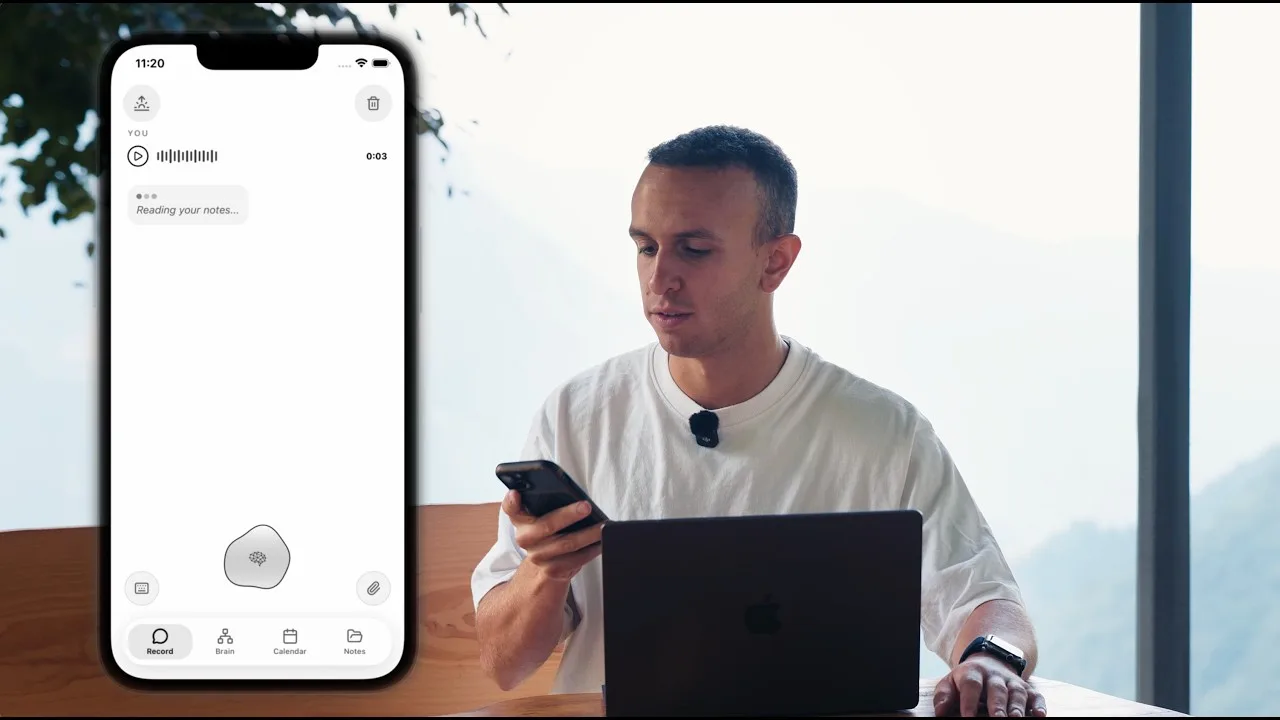
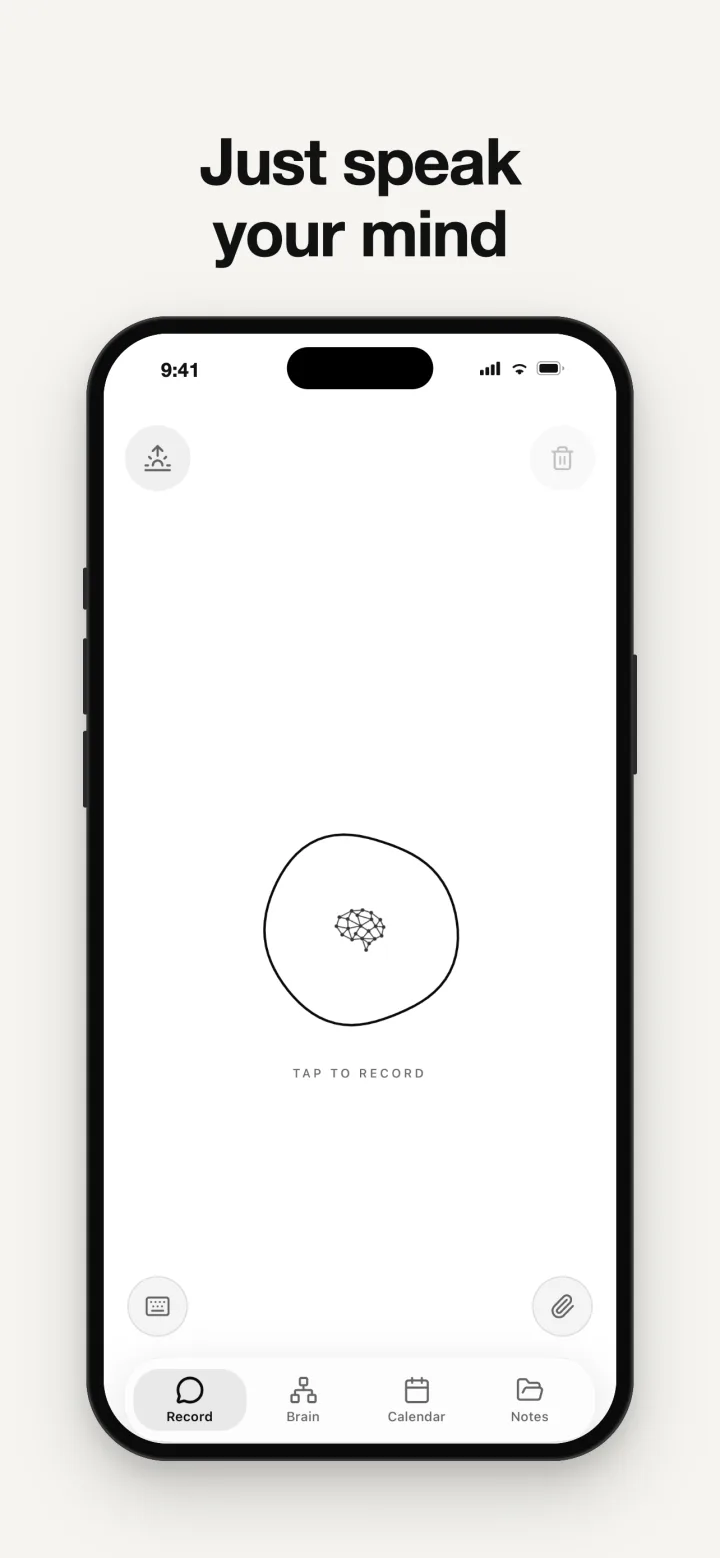
Just talk.
SecondBrain remembers.

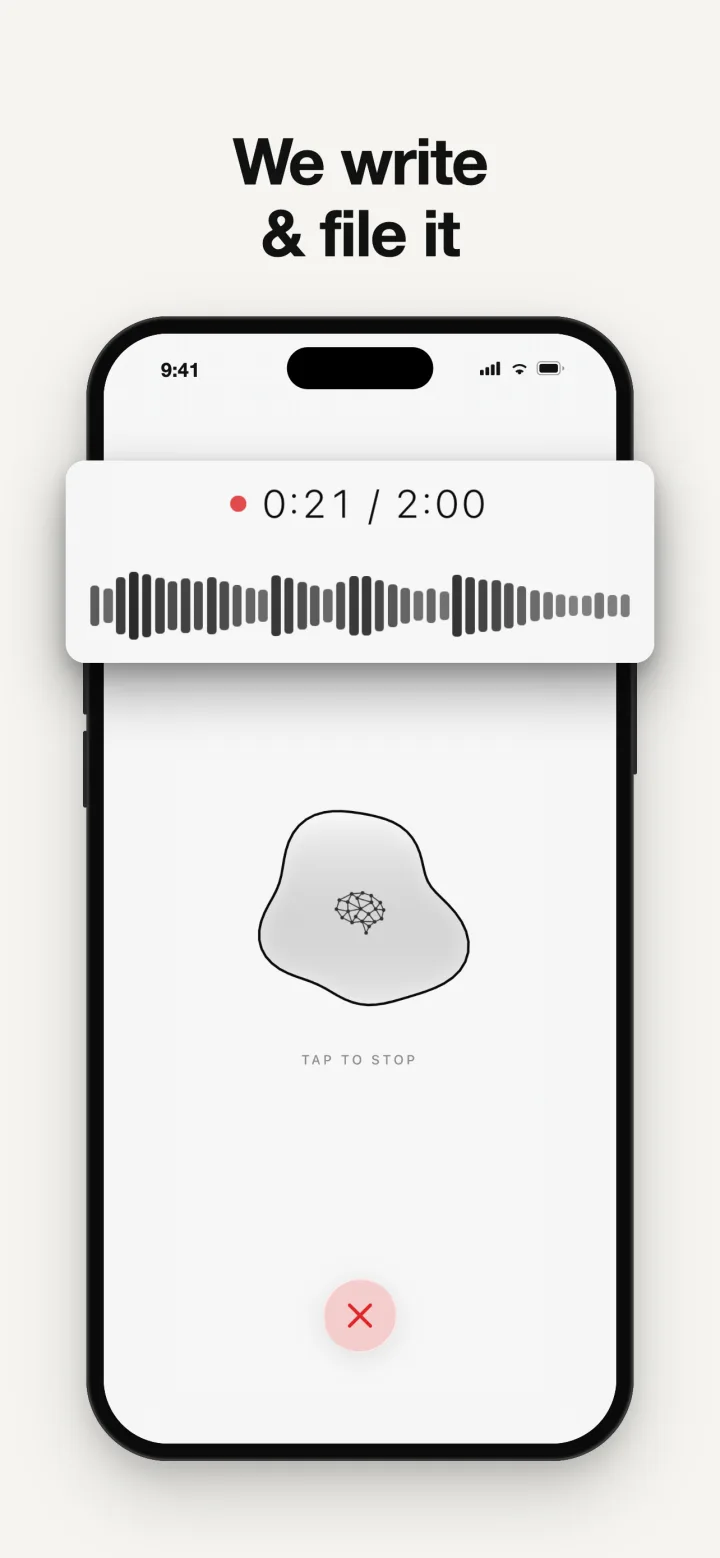
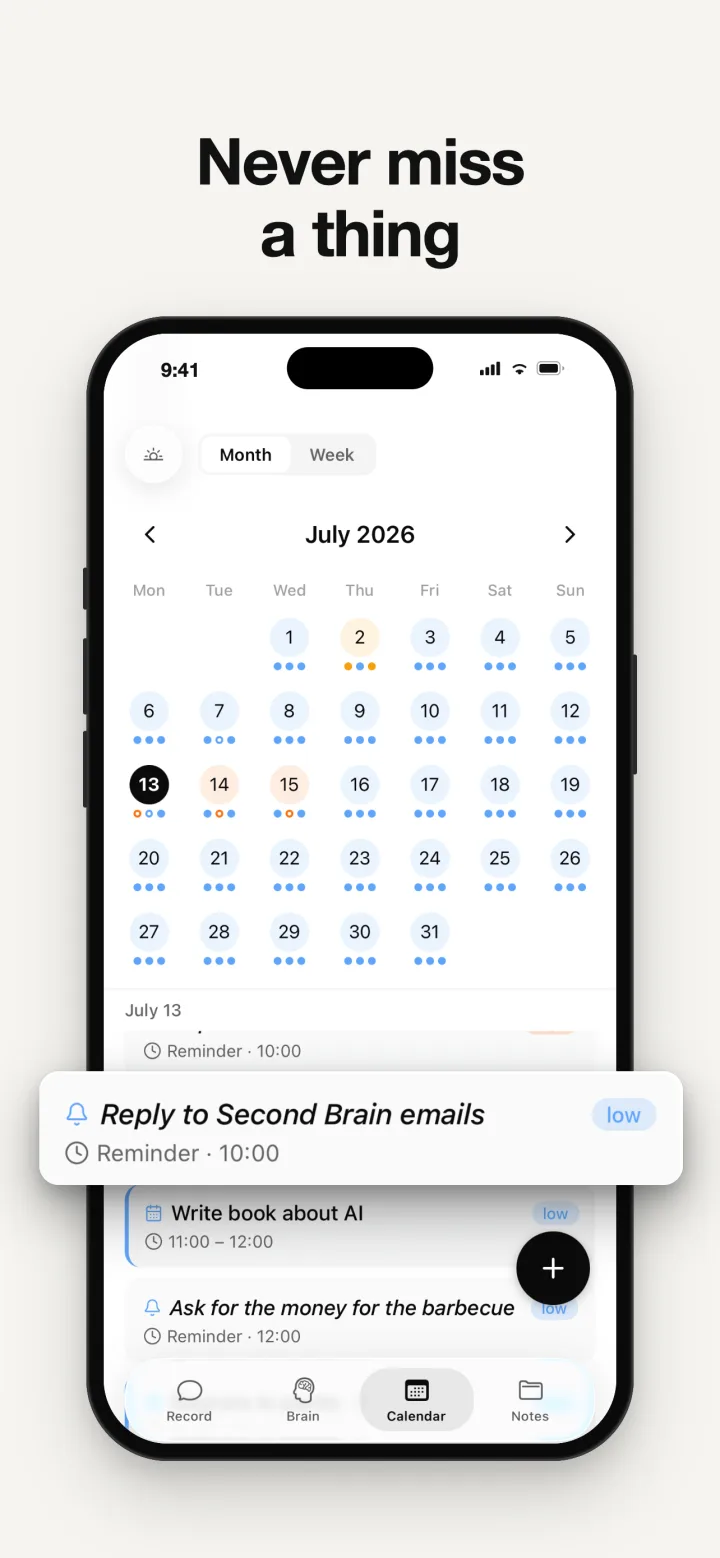
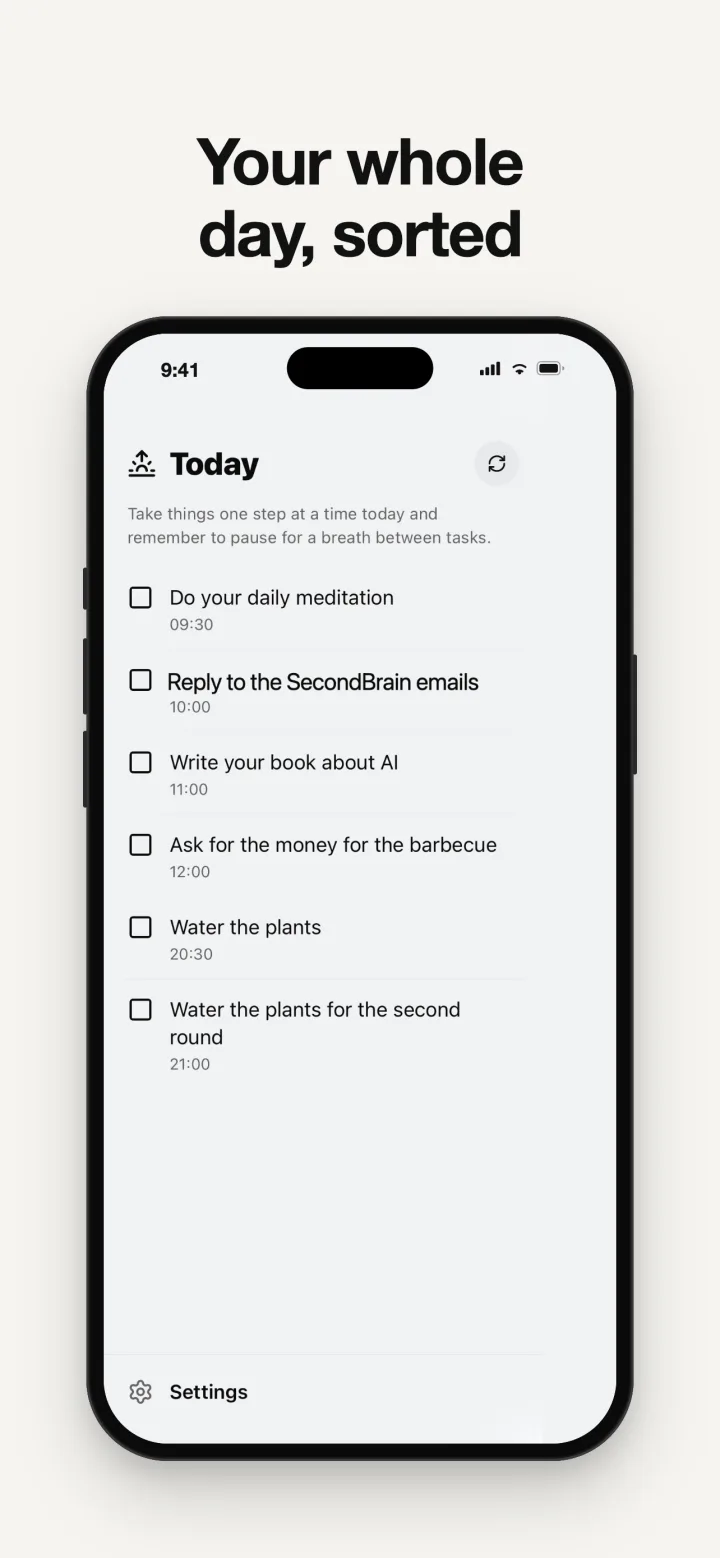
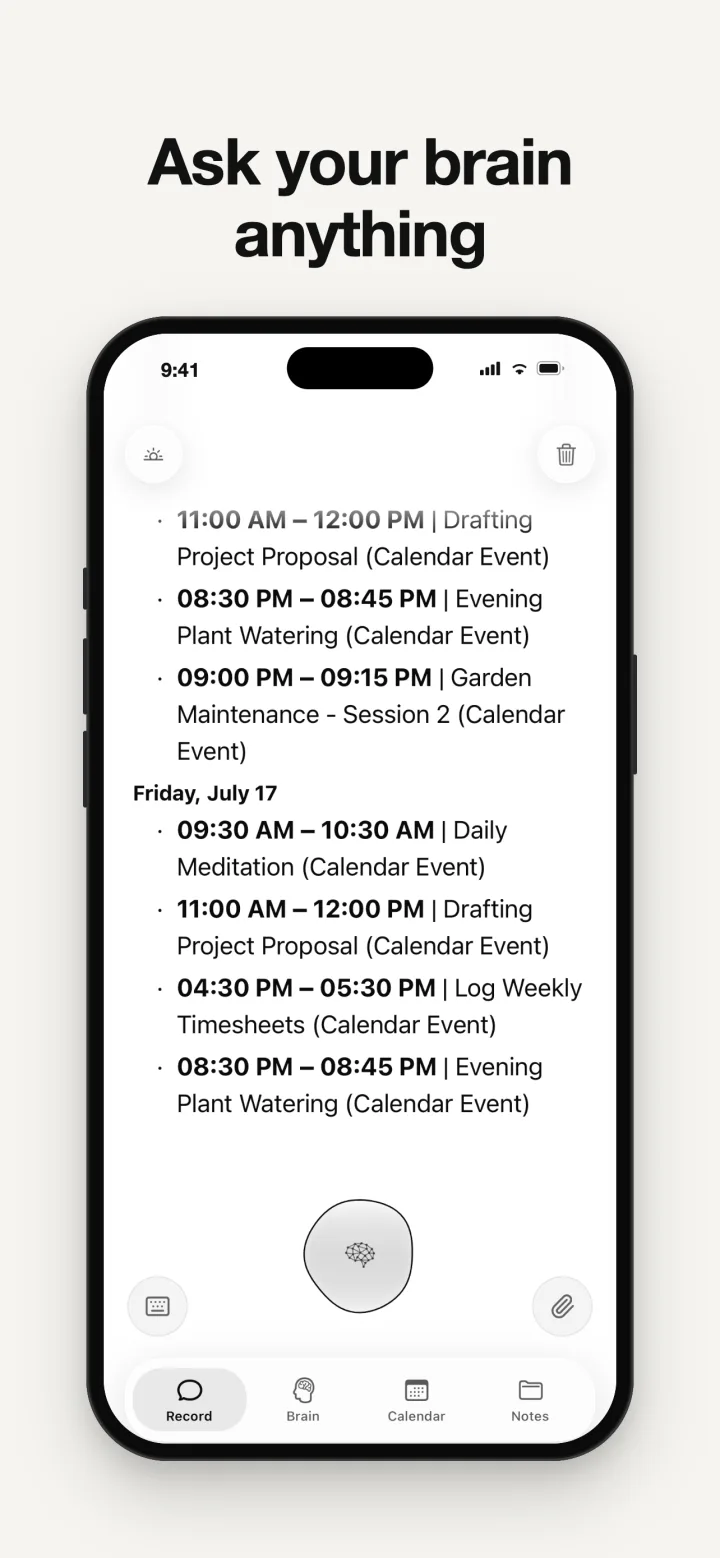
Speak once. It becomes notes, events and reminders. And every AI you use remembers. Parli una volta: diventa note, eventi e promemoria. E ogni AI che usi se li ricorda.

Connect Claude and ChatGPT Collega Claude e ChatGPT

The app L'app

Take a look. Dai un'occhiata.

Shared memory Memoria condivisa

One memory. Every AI. Una memoria. Tutte le AI.

Tell one assistant. They all remember. Lo dici a una, lo sanno tutte.

The problem Il problema

Every AI starts from zero. Ogni AI riparte da zero.

Every chat starts blank. SecondBrain gives your assistants one shared memory: yours. Ogni chat riparte da una pagina bianca. SecondBrain dà ai tuoi assistenti un'unica memoria condivisa: la tua.

Claude ChatGPT Gemini Claude Code
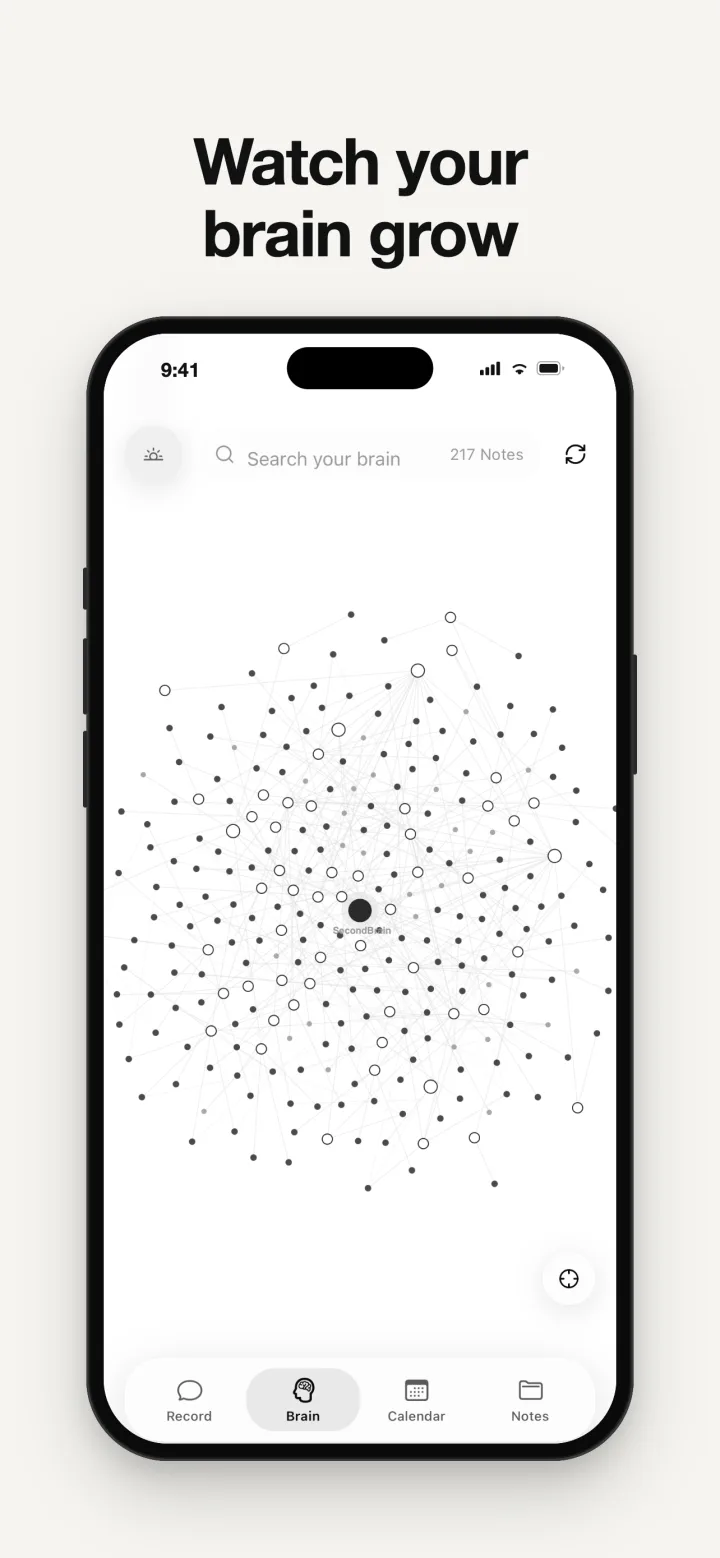
One shared brain: the SecondBrain knowledge map your AI assistants read and write
Claude

Deepest with Claude. Dà il meglio con Claude.

One plugin makes SecondBrain Claude's long-term memory. It saves, recalls and sets reminders on its own. Un plugin trasforma SecondBrain nella memoria a lungo termine di Claude: salva, ricorda e crea promemoria da solo.

Claude Native Claude plugin Plugin nativo per Claude
Your notes Le tue note

Yours to take. Portale via quando vuoi.

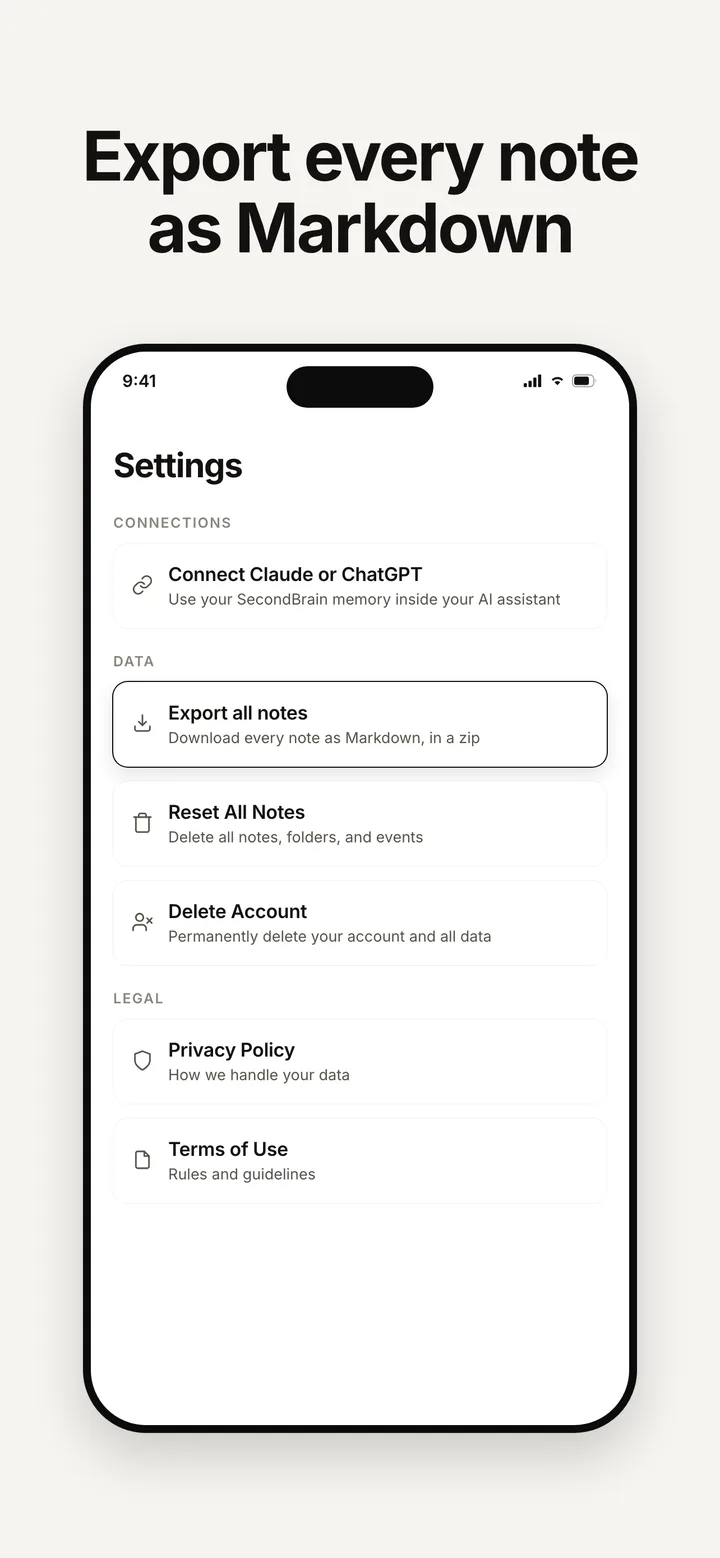
Export every note as Markdown, in one tap. Esporti tutte le note in Markdown, con un tocco.

Export Esportazione

One tap in Settings. Un tocco in Impostazioni.

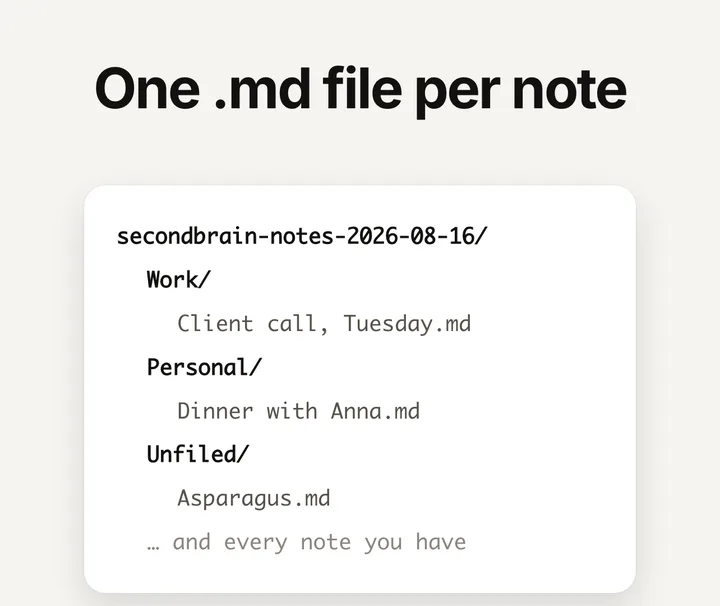
One tap in Settings and SecondBrain hands you a .zip of .md files, one per note. Plain Markdown, no proprietary format, nothing held back. Pro, on iPhone. Un tocco in Impostazioni e SecondBrain ti consegna uno zip di file .md, uno per nota. Markdown puro, nessun formato proprietario, non resta indietro niente. Pro, su iPhone.

.md .zip Obsidian Notion VS Code
Export all notes in SecondBrain Settings: download every note as Markdown, in a zip
Obsidian

Opens straight in Obsidian. Si aprono in Obsidian, e basta.

Your folders come out as folders, so you can unzip the archive into an Obsidian vault and it opens as it is. Notion, VS Code and TextEdit read the same files. No plugin, no importer. It is an export you run when you want it, not a live sync. Le tue cartelle escono come cartelle: scompatti l'archivio dentro un vault di Obsidian e si apre così com'è. Gli stessi file li leggono Notion, VS Code e TextEdit. Nessun plugin, nessun importatore. È un'esportazione che lanci tu quando vuoi, non una sincronizzazione continua.

The unzipped SecondBrain export: one .md file per note inside your own folder tree
Connect your AI Collega la tua AI

Claude, in three steps. Claude, in tre passi.

No keys. No tokens. One login. Niente chiavi. Niente token. Un solo accesso.

  1. Open Claude's plugins Apri i plugin di Claude

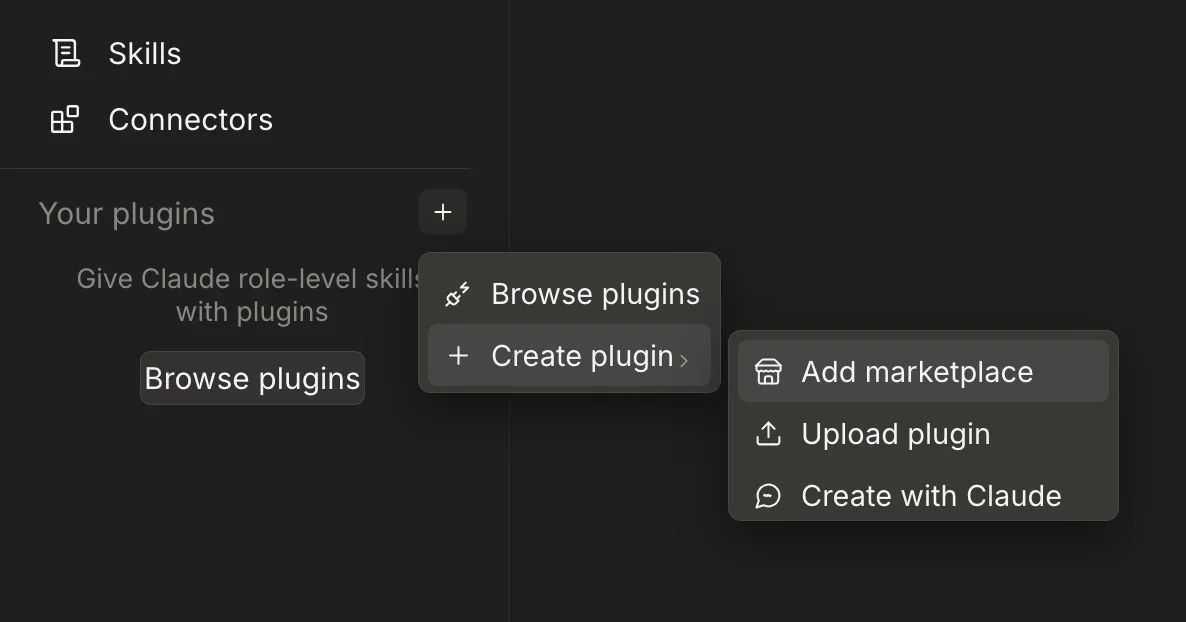
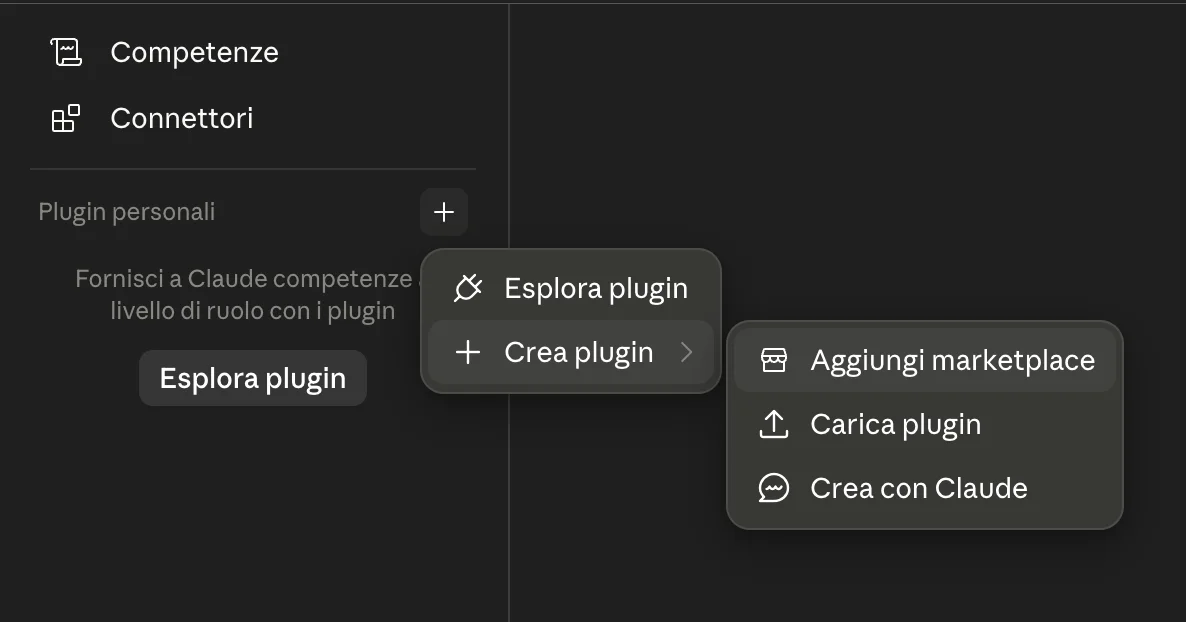
    Settings → Plugins → "+" → Add marketplace. Impostazioni → Plugin → "+" → Aggiungi marketplace.

  2. Paste the marketplace Incolla il marketplace

    fed3c3sa/secondbrain-shared-memory, then install the SecondBrain plugin. fed3c3sa/secondbrain-shared-memory, poi installa il plugin SecondBrain.

  3. Sign in Accedi

    Press Connect and log in with Apple or Google. Done. Premi Connect e accedi con Apple o Google. Fatto.

Claude plugins panel: the plus button opens Create plugin, then Add marketplace. Pannello plugin di Claude: il pulsante più apre Crea plugin, poi Aggiungi marketplace.
Claude · Settings → Plugins → + → Add marketplace Claude · Impostazioni → Plugin personali → + → Aggiungi marketplace
Also works with Funziona anche con

ChatGPT, in three steps. ChatGPT, in tre passi.

  1. Turn on Developer mode Attiva la modalità sviluppatore

    On chatgpt.com in the browser, not the app: Settings → Apps (or Security, depending on the version) → Developer mode. It needs a paid ChatGPT plan. Su chatgpt.com dal browser, non dall'app: Impostazioni → App (o Sicurezza, secondo la versione) → Modalità sviluppatore. Serve un piano ChatGPT a pagamento.

  2. Create the connector Crea il connettore

    "+" → Create custom connector. Name: SecondBrain. URL: https://ntykytpngslkytfyuaee.supabase.co/functions/v1/mcp. Authentication: OAuth. No keys, no tokens. "+" → Crea connettore personalizzato. Nome: SecondBrain. URL: https://ntykytpngslkytfyuaee.supabase.co/functions/v1/mcp. Autenticazione: OAuth. Niente chiavi, niente token.

  3. Sign in Accedi

    ChatGPT opens secondbrainmemory.com/connect: log in with Apple or Google, the same account as the app, and approve. SecondBrain shows up among your apps with 12 tools, in the desktop app too. ChatGPT apre secondbrainmemory.com/connect: accedi con Apple o Google, lo stesso account dell'app, e approva. SecondBrain compare tra le tue app con 12 strumenti, anche nell'app desktop.

Claude Code: claude plugin marketplace add fed3c3sa/secondbrain-shared-memory, then claude plugin install secondbrain@secondbrain --scope user, then npx secondbrain-connect to sign in. Claude Code: claude plugin marketplace add fed3c3sa/secondbrain-shared-memory, poi claude plugin install secondbrain@secondbrain --scope user, poi npx secondbrain-connect per accedere.

Gemini or Cursor: run npx secondbrain-connect once. Gemini o Cursor: esegui npx secondbrain-connect una volta.

Check it worked with claude mcp get secondbrain. If Claude Code's own sign-in button shows Dynamic Client Registration rejected (HTTP 404), run npx secondbrain-connect and restart Claude Code. Controlla con claude mcp get secondbrain. Se l'accesso interno di Claude Code mostra Dynamic Client Registration rejected (HTTP 404), lancia npx secondbrain-connect e riavvia Claude Code.

Shared memory is a Pro feature. Turn it on in the app first. La memoria condivisa è una funzione Pro: attivala prima nell'app.

Full setup guide on GitHub Guida completa su GitHub

Private by design. Pensata per la tua privacy.

No analytics. No ads. No training. Niente analytics. Niente pubblicità. Nessun addestramento sui tuoi dati.

No tracking Nessun tracciamento

Zero analytics. Zero ads. Zero analytics. Zero pubblicità.

Encrypted Crittografata

Isolated per user. Yours only. Isolata per utente. Solo tua.

Delete anytime Cancelli quando vuoi

One tap. No copies kept. Un tocco. Nessuna copia.

And if you ever want to leave, you can export every note as Markdown first. Pro, on iPhone. E se un giorno vuoi andartene, prima puoi esportare tutte le note in Markdown. Pro, su iPhone.

FAQ

Questions, answered. Domande e risposte.

What is a second brain app? Che cos'è un'app second brain?

A second brain app is a tool that captures everything you want to remember and stores it so you can recall it instantly. SecondBrain does this with your voice: you speak, and it turns what you said into organized notes, calendar events and reminders, then keeps them ready across your devices and AI assistants.

Un'app second brain è uno strumento che cattura tutto ciò che vuoi ricordare e lo conserva così da poterlo richiamare in un istante. SecondBrain lo fa con la tua voce: parli, e trasforma ciò che hai detto in note organizzate, eventi in calendario e promemoria, poi li tiene pronti su tutti i tuoi dispositivi e su tutte le tue AI.

What is SecondBrain? Che cos'è SecondBrain?

SecondBrain is an AI second brain app for iPhone and Android. You speak once and it remembers: it writes structured notes, files them, and creates calendar events and follow-ups while you talk. It also gives your AI assistants a shared long-term memory, so what you tell one is known by them all.

SecondBrain è un'app second brain con AI per iPhone e Android. Parli una volta e lui ricorda: scrive note strutturate, le archivia e crea eventi in calendario e promemoria mentre parli. Dà inoltre ai tuoi assistenti AI una memoria condivisa a lungo termine, così ciò che dici a uno lo sanno tutti.

Is SecondBrain free? SecondBrain è gratis?

Yes, with limits. The SecondBrain app is free to download and use on iPhone, Android and the web, and on the free plan you can capture, organize and recall your notes. A Pro subscription raises those limits and unlocks the shared memory layer that connects your AI assistants, like Claude and ChatGPT, to one private memory. You turn on Pro in the app.

Sì, con dei limiti. L'app SecondBrain è gratuita da scaricare e usare su iPhone, Android e sul web: con il piano gratuito catturi, organizzi e ritrovi le tue note. L'abbonamento Pro alza quei limiti e sblocca la memoria condivisa, quella che collega assistenti come Claude e ChatGPT a un'unica memoria privata. Pro si attiva direttamente nell'app.

How does SecondBrain share memory across ChatGPT, Claude and other AI assistants? Come condivide SecondBrain la memoria tra ChatGPT, Claude e gli altri assistenti AI?

SecondBrain connects to your assistants through the Model Context Protocol (MCP). Tell something to Claude, ChatGPT or Claude Code once and it lands in a single shared memory that is yours. Every assistant you connect can then recall it, on any device, without you repeating yourself.

SecondBrain si collega ai tuoi assistenti tramite il Model Context Protocol (MCP). Dici qualcosa a Claude, ChatGPT o Claude Code una volta e finisce in un'unica memoria condivisa, la tua. Ogni assistente che colleghi può poi richiamarla, su qualsiasi dispositivo, senza che tu lo ripeta.

How do I connect SecondBrain to Claude or ChatGPT? Come collego SecondBrain a Claude o ChatGPT?

In Claude, add the marketplace fed3c3sa/secondbrain-shared-memory, install the SecondBrain plugin, then press Connect and sign in with Apple or Google. No keys or tokens. For ChatGPT, Gemini or Cursor, run npx secondbrain-connect once and sign in in the browser.

In Claude aggiungi il marketplace fed3c3sa/secondbrain-shared-memory, installa il plugin SecondBrain, poi premi Connect e accedi con Apple o Google. Niente chiavi, niente token. Per ChatGPT, Gemini o Cursor basta eseguire npx secondbrain-connect una volta e accedere dal browser.

Which devices does SecondBrain work on? Su quali dispositivi funziona SecondBrain?

SecondBrain runs on iPhone and Android. The shared memory also works with desktop AI tools such as Claude, Claude Code, ChatGPT, Gemini and Cursor, so a memory you create on your phone is available wherever you use AI.

SecondBrain funziona su iPhone e Android. La memoria condivisa funziona anche al computer, con Claude, Claude Code, ChatGPT, Gemini e Cursor: quello che salvi dal telefono lo ritrovi ovunque usi l'AI.

Is my data private? I miei dati sono privati?

Yes. SecondBrain has no analytics, no ads and never trains on your data. Your memory is encrypted and isolated per user, so it is yours alone. You can delete everything at any time with one tap, and no copies are kept.

Sì. SecondBrain non usa analytics né pubblicità e non addestra mai l'AI sui tuoi dati. La tua memoria è crittografata e isolata per ogni utente, quindi è solo tua. E puoi cancellare tutto quando vuoi, con un tocco: non resta nessuna copia.

How is SecondBrain different from a notes app like Notion or Obsidian? In cosa è diverso SecondBrain da un'app di note come Notion o Obsidian?

Notes apps wait for you to type, organize and re-read. SecondBrain works from your voice and does the filing for you, then makes that memory available to your AI assistants. Instead of searching a document, you just ask Claude or ChatGPT and get the answer from your own memory.

Le app di note aspettano che tu scriva, organizzi e rilegga. SecondBrain parte dalla tua voce e archivia al posto tuo, poi rende quella memoria disponibile ai tuoi assistenti AI. Invece di cercare in un documento, chiedi a Claude o ChatGPT e ottieni la risposta dalla tua memoria.

How does SecondBrain compare to AI memory tools like Mem or Rewind? E rispetto a strumenti di memoria AI come Mem o Rewind?

Most AI memory tools focus on one surface: capturing typed notes, recording your screen, or storing chat history inside a single app. SecondBrain is built around two things: voice capture that becomes structured notes, calendar events and reminders on your phone, and one shared memory your AI assistants read and write through MCP. The result is a memory you speak into once and can reach from Claude, ChatGPT, Gemini, Cursor or Claude Code, instead of a memory locked to one tool.

Quasi tutti gli strumenti di memoria AI coprono una sola superficie: note scritte, registrazione dello schermo o cronologia delle chat dentro una singola app. SecondBrain è costruito attorno a due cose: la cattura vocale che diventa note strutturate, eventi e promemoria sul telefono, e un'unica memoria che i tuoi assistenti AI leggono e scrivono tramite MCP. Il risultato è una memoria in cui parli una volta sola e che ritrovi da Claude, ChatGPT, Gemini, Cursor o Claude Code, invece di una memoria chiusa in un solo strumento.

What are the best second brain apps in 2026? Quali sono le migliori app second brain nel 2026?

SecondBrain: AI Memory is the one to start with if you want your notes to be useful to your AI assistants and not only to you: you speak, it writes the note, files it and sets the reminders, and that same memory is handed to Claude, ChatGPT and Gemini, so you ask instead of search. Among the alternatives, Notion and Obsidian are the strongest if you enjoy building your own system by typing, Mem, Tana and Reflect use AI to organize what you write, and Voicenotes and TellDone also capture by voice, though the memory stays inside their own apps. All of them are compared, honestly, in the guide to voice second brain apps.

SecondBrain: AI Memory è la prima da guardare se vuoi che i tuoi appunti servano anche ai tuoi assistenti AI e non solo a te: parli, lui scrive la nota, la archivia e imposta i promemoria, e quella stessa memoria finisce a disposizione di Claude, ChatGPT e Gemini, così invece di cercare chiedi. Tra le alternative, Notion e Obsidian restano i più solidi se ti piace costruirti il sistema scrivendo tutto a mano, Mem, Tana e Reflect usano l'AI per organizzare quello che scrivi, mentre Voicenotes e TellDone catturano anche loro con la voce, ma la memoria resta dentro le loro app. Nella guida alle app second brain vocali li confrontiamo tutti, senza sconti.

How is SecondBrain different from ChatGPT's or Claude's built-in memory? In cosa è diverso dalla memoria integrata di ChatGPT o Claude?

Built-in memory in ChatGPT or Claude stays inside that one assistant and that one account. SecondBrain keeps a single memory that you own and connects it to Claude, ChatGPT, Gemini, Cursor and Claude Code through the Model Context Protocol, so a note you save in one is available in all of them. It also captures from your voice on iPhone and Android, not only from a chat window.

La memoria integrata di ChatGPT o di Claude resta chiusa dentro quell'assistente e quell'account. SecondBrain tiene un'unica memoria, tua, e la collega a Claude, ChatGPT, Gemini, Cursor e Claude Code tramite il Model Context Protocol: una nota salvata in uno è disponibile in tutti. E in più cattura dalla tua voce su iPhone e Android, non solo da una finestra di chat.

Does Claude have memory like ChatGPT? Claude ha una memoria come ChatGPT?

Yes. Claude remembers across conversations, follows the standing instructions you set in your preferences and keeps per-project context, much as ChatGPT does with saved memories and custom instructions. The catch is the boundary: each memory belongs to its own account, so what you tell Claude stays unknown to ChatGPT, and the other way around. SecondBrain sits outside both and gives them one memory to share, so you set your context up once instead of twice and it is there whichever assistant you open.

Sì. Claude ricorda da una conversazione all'altra, segue le istruzioni permanenti che imposti nelle preferenze e tiene il contesto dei progetti, più o meno come fa ChatGPT con i ricordi salvati e le istruzioni personalizzate. Il problema è il confine: ogni memoria appartiene al suo account, quindi quello che dici a Claude resta sconosciuto a ChatGPT, e viceversa. SecondBrain sta fuori da entrambi e dà loro un'unica memoria da condividere: prepari il tuo contesto una volta invece di due e lo ritrovi in qualunque assistente apri.

How do I transfer my ChatGPT memory to Claude? Come trasferisco la memoria di ChatGPT su Claude?

There is no import button, but you do not need one. Connect SecondBrain to ChatGPT, ask ChatGPT to save what it knows about you into SecondBrain, then connect Claude to the same memory: it is already there. Nothing is copied by hand, and from then on both assistants read and write that one memory, so neither falls behind. Step by step in the guide to transferring ChatGPT memory to Claude.

Non esiste un pulsante di importazione, ma non serve. Colleghi SecondBrain a ChatGPT, chiedi a ChatGPT di salvare in SecondBrain quello che sa di te, poi colleghi Claude alla stessa memoria: la trova già lì. Non copi niente a mano e da quel momento i due assistenti leggono e scrivono quell'unica memoria, così nessuno dei due resta indietro. Il passo passo è nella guida per trasferire la memoria da ChatGPT a Claude.

How does the Model Context Protocol (MCP) connection work? Come funziona il collegamento tramite Model Context Protocol (MCP)?

The Model Context Protocol (MCP) is an open standard that lets AI assistants call external tools and data sources. SecondBrain runs an MCP server that your assistant connects to after you sign in with Apple or Google, with no API keys to copy. Once connected, the assistant can save to and recall from your SecondBrain memory during a chat, and that same memory is shared across every assistant you connect.

Il Model Context Protocol (MCP) è uno standard aperto che permette agli assistenti AI di usare strumenti e fonti di dati esterni. SecondBrain espone un server MCP a cui il tuo assistente si collega dopo l'accesso con Apple o Google, senza chiavi API da copiare. Una volta collegato, l'assistente può salvare e richiamare la tua memoria SecondBrain durante la chat, e quella stessa memoria è condivisa con ogni assistente che colleghi.

Is SecondBrain related to Tiago Forte's Building a Second Brain method? SecondBrain c'entra con il metodo Building a Second Brain di Tiago Forte?

The term second brain was popularized by Tiago Forte's book Building a Second Brain, which teaches a manual method for capturing and organizing notes. SecondBrain shares the same goal of a trusted external memory, but it works from your voice and files notes, events and reminders automatically, then makes that memory available to your AI assistants. It is an independent app and is not affiliated with Tiago Forte or his course.

Il termine second brain è diventato famoso con il libro Building a Second Brain di Tiago Forte, che insegna un metodo manuale per catturare e organizzare le note. SecondBrain condivide lo stesso obiettivo, una memoria esterna di cui fidarti, ma parte dalla tua voce e archivia note, eventi e promemoria da solo, poi rende quella memoria disponibile ai tuoi assistenti AI. È un'app indipendente, non affiliata a Tiago Forte né al suo corso.

Where is my data stored? Dove sono salvati i miei dati?

SecondBrain stores your notes, folders and calendar events in a Supabase PostgreSQL database hosted in the European Union, isolated per account with Row-Level Security so you can only reach your own data. Voice and text are processed in real time by Google Gemini on its paid API tier, which does not train on your content. Everything travels over HTTPS, and you can delete your account and all its data at any time from the app.

SecondBrain salva note, cartelle ed eventi di calendario in un database PostgreSQL su Supabase, ospitato nell'Unione Europea e isolato per account tramite Row-Level Security: puoi accedere solo ai tuoi dati. Voce e testo vengono elaborati in tempo reale da Google Gemini (API a pagamento), che non addestra i modelli sui tuoi contenuti. Tutto viaggia su HTTPS e puoi eliminare l'account con tutti i dati quando vuoi, direttamente dall'app.

Can I export my data or take it with me? Posso esportare i miei dati o portarli via?

Yes. On iPhone, SecondBrain Pro exports every note as Markdown from Settings, as a .zip holding one .md file per note in your own folder tree. For anything beyond notes, or on another platform, you can request a full export of your data by emailing [email protected]. You can also delete your entire account and all associated data from the app under Settings, then Delete Account: removal is immediate on the live database, and encrypted backups are erased within days.

Sì. Su iPhone, con SecondBrain Pro esporti tutte le note in Markdown da Impostazioni: ottieni uno zip con un file .md per nota, dentro le tue stesse cartelle. Per il resto dei dati, o da un'altra piattaforma, puoi chiedere un'esportazione completa scrivendo a [email protected]. Puoi anche eliminare l'intero account con tutti i dati dall'app, da Impostazioni e poi Elimina account: la rimozione è immediata sul database in produzione e i backup cifrati vengono eliminati entro pochi giorni.

How do I export my notes from SecondBrain? Come esporto le mie note da SecondBrain?

Open Settings in SecondBrain on your iPhone, tap Export all notes, and choose where to save the file. SecondBrain builds a .zip containing one Markdown (.md) file per note, arranged in the same folder tree you see in the app, and hands it to the iOS share sheet so you can save it to Files, iCloud Drive or anywhere else. Export is a Pro feature. It has no practical size limit: it was tested end to end on an account with 1,203 notes.

Apri Impostazioni in SecondBrain sul tuo iPhone, tocca Esporta tutte le note e scegli dove salvare il file. SecondBrain prepara uno zip con un file Markdown (.md) per ogni nota, dentro lo stesso albero di cartelle che vedi nell'app, e lo passa al menu di condivisione di iOS, così lo salvi su File, su iCloud Drive o dove preferisci. L'esportazione è una funzione Pro e non ha limiti pratici di dimensione: è stata provata da capo a fondo su un account con 1.203 note.

Does SecondBrain export to Obsidian? SecondBrain esporta in Obsidian?

Yes. SecondBrain exports plain Markdown, which is Obsidian's own format, so you unzip the archive into your Obsidian vault and the notes open straight away, with no plugin and no importer. Your SecondBrain folders come out as real folders, so the structure survives the move intact. One thing to be clear about: this is an export you run when you want it, not a continuous sync with your vault. Export is a Pro feature on iPhone.

Sì. SecondBrain esporta Markdown puro, che è il formato nativo di Obsidian: scompatti l'archivio dentro il tuo vault e le note si aprono subito, senza plugin e senza importatori. Le cartelle di SecondBrain escono come cartelle vere, quindi la struttura arriva intatta. Una precisazione: è un'esportazione che lanci tu quando vuoi, non una sincronizzazione continua col vault. L'esportazione è una funzione Pro su iPhone.

How do I import my SecondBrain notes into Obsidian, Notion or VS Code? Come importo le note di SecondBrain in Obsidian, Notion o VS Code?

Export the archive from SecondBrain, unzip it, then point the other app at the folder. In Obsidian, move the unzipped folder into your vault, or open it as a vault of its own. In Notion, choose Import and pick Markdown. In VS Code, just open the folder. Every file is a standard .md file, so nothing has to be converted on the way in.

Esporta l'archivio da SecondBrain, scompattalo e poi punta l'altra app su quella cartella. In Obsidian sposti la cartella dentro il tuo vault, oppure la apri direttamente come vault. In Notion scegli Importa e selezioni Markdown. In VS Code ti basta aprire la cartella. Ogni file è un normale .md, quindi non c'è niente da convertire.

What format does the SecondBrain Markdown export use? Che formato usa l'esportazione Markdown di SecondBrain?

The SecondBrain export is a .zip of Markdown files, named after the day you exported, for example secondbrain-notes-2026-08-16.zip. Inside, each note is a single .md file whose title is written as a level-one heading, with no YAML front matter to strip out. Folders are recreated as directories, and any note that is not filed lands in a folder called Unfiled.

L'esportazione di SecondBrain è uno zip di file Markdown, con il nome del giorno in cui l'hai fatta, per esempio secondbrain-notes-2026-08-16.zip. Dentro, ogni nota è un singolo file .md con il titolo scritto come intestazione di primo livello, senza front matter YAML da ripulire. Le cartelle vengono ricreate come directory e le note senza cartella finiscono in una chiamata Unfiled.

Am I locked in to SecondBrain, or can I leave with my notes? Con SecondBrain resto incastrato o posso andarmene con le mie note?

You can leave with everything. SecondBrain keeps your notes in plain Markdown on the way out, so one tap in Settings gives you every note as .md files that open in Obsidian, Notion, VS Code or any text editor, with your folder structure intact. Nothing is trapped in a format that only SecondBrain can read. The export is a Pro feature on iPhone.

Puoi andartene con tutto. In uscita SecondBrain ti dà le note in Markdown puro: un tocco in Impostazioni e hai ogni nota come file .md, che si aprono in Obsidian, Notion, VS Code o in qualsiasi editor di testo, con la tua struttura di cartelle intatta. Niente resta chiuso in un formato che solo SecondBrain sa leggere. L'esportazione è una funzione Pro su iPhone.

Which AI voice notes app exports to Markdown? Quale app di note vocali con AI esporta in Markdown?

SecondBrain is an AI voice notes app that exports to Markdown. You speak, SecondBrain writes the note up and files it into the right folder on its own, and whenever you want the whole library back you export it as .md files in a .zip from Settings on iPhone. That pairing, voice capture going in and Markdown coming out, is why people run it alongside an Obsidian vault rather than instead of one.

SecondBrain è un'app di note vocali con AI che esporta in Markdown. Tu parli, lui scrive la nota e la archivia da solo nella cartella giusta, e quando vuoi indietro tutta la libreria la esporti come file .md dentro uno zip, da Impostazioni su iPhone. È proprio questa combinazione, voce in ingresso e Markdown in uscita, il motivo per cui in tanti lo usano insieme a un vault di Obsidian invece che al posto suo.

Start remembering. Inizia a ricordare.

On iPhone, Android and the web. Su iPhone, Android e sul web.